
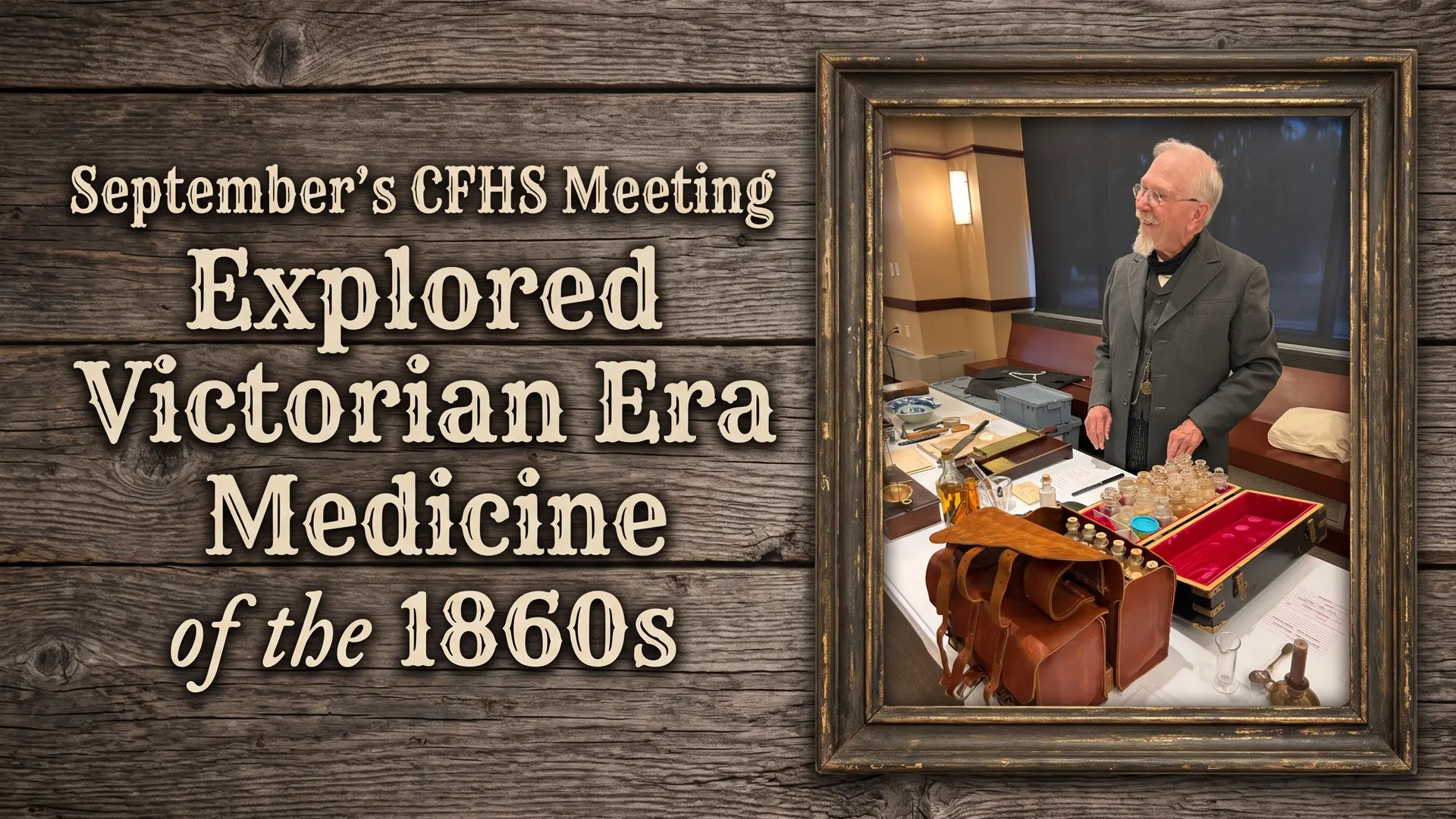
Quick answer: On September 8, 2026, the Cuyahoga Falls Historical Society opened its fall program season with a talk on Victorian era medicine by historical presenter Richard Best. Best showed 1860s surgical instruments, splints and medicines, demonstrated how pills were rolled by hand, and explained the medical theories of the time.
Key historical snapshot
- Event: CFHS Fall 2026 season opener, September 8, 2026
- Presenter: Richard Best, historical presenter
- Topic: Medicine in the 1860s, including surgical instruments, splints, medicines, pill rolling and period medical theory
- Research sources: Period physicians’ manuals, plus interviews with physicians, surgeons, a pharmacist, and Jim Edmonson, retired chief curator of the Dittrick Museum of Medical History in Cleveland
What Did Medicine Look Like in the 1860s?
In the 1860s, mills were still turning along the Cuyahoga River gorge, and a doctor’s bag held tools that would startle anyone today. Richard Best’s presentation took the audience back to that decade. He laid out surgical instruments and splints and explained the medicines of the day. He also covered the medical theories doctors relied on before germ theory was accepted, along with stories from the era that made the history feel real.
How Did Doctors Train in the Victorian Era?
Best found that many physicians of the period did not go to medical school. Instead, they “read medicine” with a practicing doctor. They studied that doctor’s books, watched him work, and learned at his side until they could practice on their own.
Best followed a similar path to prepare for his talk. He read physicians’ manuals from the period. He also consulted modern physicians, surgeons, a pharmacist, and Jim Edmonson, the longtime chief curator of Cleveland’s Dittrick Museum of Medical History at Case Western Reserve University.
What Is Pill Rolling?
Before factories made tablets, pharmacists and physicians made pills by hand. They mixed the medicine with a binder, rolled it into a thin rope, cut it into equal pieces, and rounded each piece into a pill, often with the help of a hand-operated pill machine. Best demonstrated the process for the audience. In the 19th-century pharmacy sense, “pill rolling” means this hand process, not the medical tremor that shares the name.
At our September meeting, historical presenter Richard Best spoke about surgical instruments, splints, and medicines of the 1860s, and demonstrated pill rolling.
Join Us at the Next Cuyahoga Falls Historical Society Meeting
Programs like this one bring the history of Cuyahoga Falls and the wider region to life all season long. Upcoming meetings are posted on our Events page. To dig into the city’s past on your own, explore our research resources or visit the museum at 2083 Cook Street, Cuyahoga Falls, OH 44221. It is open Mondays from 9:00 AM to 12:00 PM (except holidays) and on the 1st and 3rd Sundays of each month.
Want programs like this delivered to your calendar? Become a member and support local history. And if you missed it, see our Front Street window display of Cuyahoga Falls school memorabilia.
Frequently Asked Questions
What was the topic of the September 2026 Cuyahoga Falls Historical Society meeting?
Historical presenter Richard Best spoke about Victorian era medicine on September 8, 2026. He covered 1860s surgical instruments, splints, medicines, pill rolling, and the medical theories of the time.
How did doctors become doctors in the 1860s?
Many learned by “reading medicine,” which was an apprenticeship with a practicing physician. They studied the doctor’s books and learned by working beside him. Medical school was not always required.
What is pill rolling in pharmacy history?
Pill rolling was the way pharmacists and physicians made pills by hand. They shaped a mixture of medicine and binder into a rope, cut it into pieces, and rolled each piece round, often using a pill machine.
How can I attend a Cuyahoga Falls Historical Society meeting?
Upcoming meetings are listed on the CFHS Events page. You can also call (330) 510-1162, email, or reach us through our Contact Us page.
The Latest…
Matthew Crawford: Cuyahoga Falls’ Strawberry and Gladiolus King
Quick Answer: Matthew Crawford (1839–1918) was an Irish-born horticulturist who settled in Cuyahoga Falls, Ohio, and became one of America's leading authorities on strawberries and gladioli. His guide Strawberry Culture and decades of mail-order catalogs made the M....
Relive Your Cuyahoga Falls School Days at Our Front Street Window Display
Quick answer: The Cuyahoga Falls Historical Society has opened a free storefront window display of vintage Cuyahoga Falls school memorabilia at 2114 Front Street, in the front window of Circle Prime Manufacturing—the building many longtime Fallsites remember as...

A New Chapter for Our History: Celebrating Our Legacy and Our New Online Home
For over four decades, the Cuyahoga Falls Historical Society has served as the memory of our community. Since our founding in 1980, we’ve been the stewards of the stories, artifacts, and milestones that have shaped Cuyahoga Falls from its settlement in 1812 to the...