
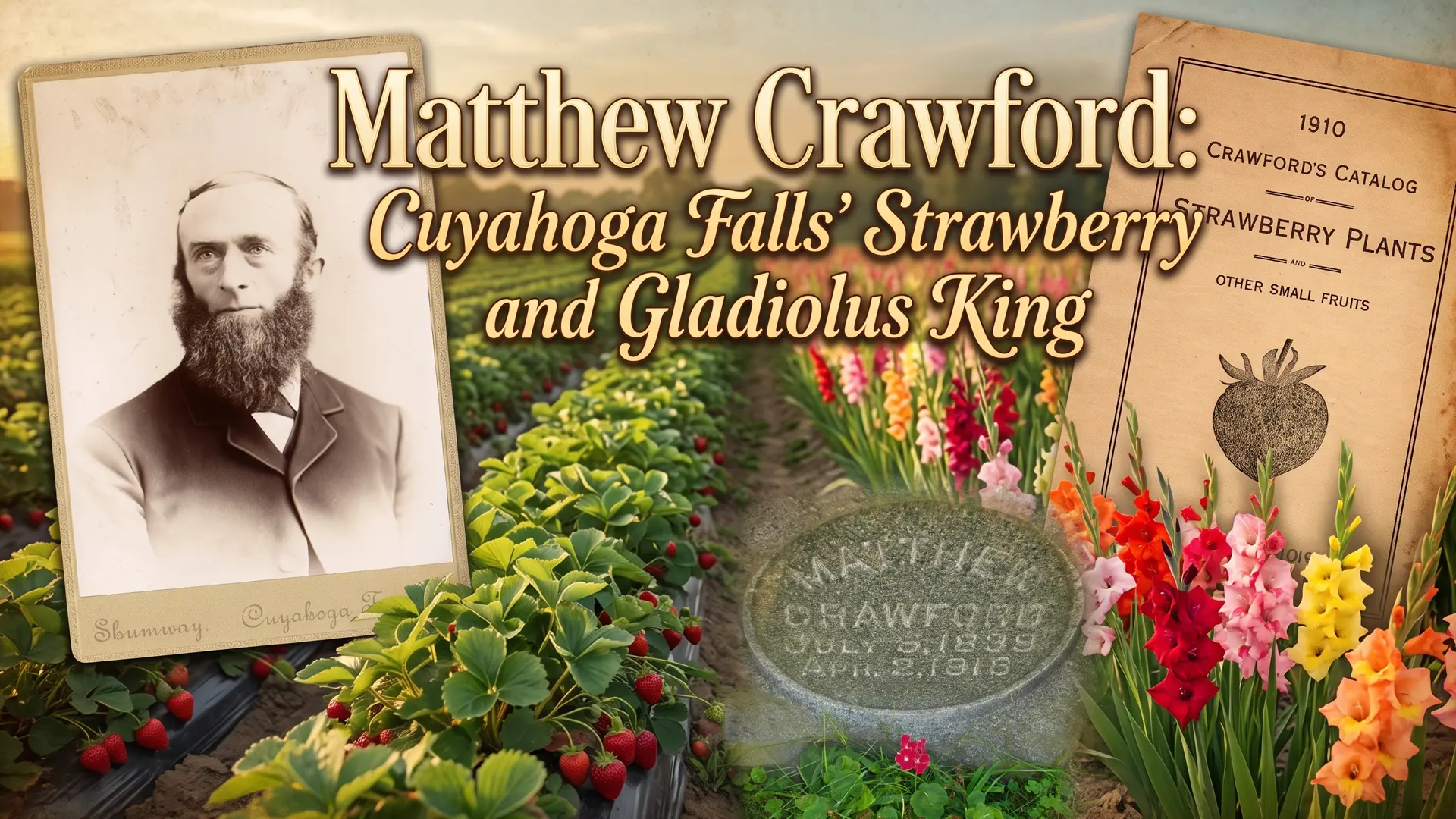
Quick Answer: Matthew Crawford (1839–1918) was an Irish-born horticulturist who settled in Cuyahoga Falls, Ohio, and became one of America’s leading authorities on strawberries and gladioli. His guide Strawberry Culture and decades of mail-order catalogs made the M. Crawford Company of Cuyahoga Falls a nationally known name, and he was hailed as the “Dean of Gladiolus Culture.” He is buried with his wife, educator Ellen Knight Crawford, in the city’s historic Oakwood Cemetery.
Key Historical Snapshot
- Born: July 5, 1839, County Antrim, Ireland; emigrated to Ohio as a boy of about ten.
- Came to Cuyahoga Falls: After marrying Ellen Knight on Christmas Eve 1863, drawn by soil he believed was ideal for strawberries.
- Known for: Strawberry Culture (editions from about 1880), nationally distributed strawberry catalogs, and pioneering large-scale gladiolus breeding.
- Died: April 1918, of pneumonia; buried at Oakwood Cemetery, 2420 Oakwood Drive, Cuyahoga Falls.
Our community has been home to many inventors and business leaders, but few left a legacy as sweet — or as colorful — as Matthew Crawford. An Irish immigrant who arrived with little more than a work ethic, Crawford helped make Cuyahoga Falls a beautiful (and tasty!) place to live while earning national recognition in the field of horticulture.
If the name Crawford sounds familiar, there’s good reason. His wife, Ellen Knight Crawford, was a beloved local teacher, and the former Crawford School at Third Street and Tifft Avenue was named in her honor. Artifacts from that era are part of the collection at the Cuyahoga Falls Historical Society Museum.
Who Was Matthew Crawford?
Matthew Crawford was born in County Antrim, Ireland, on July 5, 1839. His father died when Matthew was very young, and at about age ten his mother brought him and his younger brother to America. After a brief stay in central Ohio, the family settled in the Cleveland area.
How Did an Irish Immigrant Learn Horticulture?
By 1854, the teenage Crawford was working on the farm of George H. Lodge, a prominent Cleveland market gardener whose family would later be associated with Silver Lake Park. On the Lodge farm, Matthew learned the methods of cultivating and propagating plants — and from that point until his death, he never worked in any other trade.
Though he experimented with new vegetable varieties his entire life, his true passions became two very different crops: the strawberry and the gladiolus.
Why Did Crawford Choose Cuyahoga Falls?
On Christmas Eve 1863, Matthew married Ellen Knight — who, remarkably, had once been his schoolteacher. The couple soon moved to Cuyahoga Falls, where Matthew believed the soil was better suited to growing strawberries than anywhere else he had worked.
It was a choice that would put the Falls on the horticultural map. In a town better known for its water-powered mills and factories along the Cuyahoga River gorge, Crawford built a business rooted in the earth itself. Read more Cuyahoga Falls history stories from the CFHS blog.
How Did Matthew Crawford Shape American Strawberry Growing?
Crawford quickly became a key figure in local and state horticultural societies, and his research into strawberry cultivation earned him a national reputation for developing new varieties of the fruit.
His guide, Strawberry Culture, first appeared around 1880 and was revised and reissued for decades. It established Crawford as one of the founding figures of America’s commercial strawberry-growing industry, and it remains a respected treatise today. Early editions have been digitized by the USDA National Agricultural Library and can be read free through the Biodiversity Heritage Library.
Crawford also reached growers through mail-order catalogs shipped across the country. In 1900 he organized the M. Crawford Company, and its 1913 catalog noted that he had by then been planting strawberries for 57 years and selling plants for 46. Contemporary reviewers praised those catalogs for their honesty — Crawford described each variety’s weaknesses as frankly as its strengths.
Why Was Matthew Crawford Called the “Dean of Gladiolus Culture”?
Crawford was equally skilled with gladioli, and the flower industry came to know him as the Dean of Gladiolus Culture. He is credited as the first person in America to plant gladiolus seed in large quantities, producing many new varieties that became famous and popular.
He was also among the first major suppliers of gladiolus bulbs to seed houses, and he developed more seedling gladioli than anyone else of his era. The passion ran in the family: his son Norman L. Crawford became a gladiolus grower in Elyria, Ohio.
What Was the Crawford Home on Sackett Avenue Like?
Early in their marriage, the Crawfords lived on Sackett Avenue, and by every account the property was stunning. The late Falls historian Eric J. Thompson, a godson of the Crawfords, described it this way:
“The house stood near the west side, two hundred feet back from Sackett Street on his acre of land with a circular driveway running from his east line on Sackett Street, southwesterly to the house, then back to the entrance and was flanked with a double row of beautiful peonies and in the spring a field of golden daffodils. During the summer months, there was a large field of gladiolas.”
At one point, Crawford is said to have grown as many as 40,000 gladioli on the property.
That idyll ended around 1912, when construction of the Gorge dam brought a large high-tension power line straight across the Crawfords’ land. Matthew and Ellen moved closer to town, to a property on Fourth Street between Sackett and Falls avenues.
How Did the Crawfords Serve the Cuyahoga Falls Community?
When Matthew wasn’t tending plants, he and Ellen were tending their community. Together they helped nearby communities establish schools and churches, visited families in need, and worked to beautify the grounds of Oakwood Cemetery.
Ellen’s dedication to education was so deeply felt that, in the 1920s, her former students launched a fundraising campaign to build a memorial fountain in her honor on Broad Boulevard.
How Did Matthew and Ellen Crawford Die?
Tragedy struck in 1916. On her way to a school board meeting during a snowstorm, Ellen Knight Crawford was struck by a streetcar and killed.
Matthew survived her by two years. In April 1918, while staying at the home of a cousin in Belle Center, Ohio, he died after a brief bout of pneumonia. His funeral was held in Cuyahoga Falls.
Where Is Matthew Crawford Buried?
Matthew and Ellen Crawford rest in a modest family plot in Cuyahoga Falls’ historic Oakwood Cemetery, 2420 Oakwood Drive. The cemetery’s 1898 Oakwood Cemetery Chapel is listed on the National Register of Historic Places, and many of the city’s pioneer families are buried nearby. Researching your own Falls ancestors? Start with our archives and genealogy research resources.
A Living Legacy
Though the Crawfords are long gone, their good works endure — Matthew’s through his research and publications, Ellen’s through the generations of students she taught.
And some of that legacy can still be tasted. A current Cuyahoga Falls resident who lives on one of Matthew’s old properties reports that strawberries he planted more than a century ago still grow wild there — and they are delicious.
See Crawford’s Story at the CFHS Museum
Want to explore more Cuyahoga Falls history — from Front Street merchants to the families who shaped Summit County? Visit the Cuyahoga Falls Historical Society Museum at 2083 Cook Street, Cuyahoga Falls, OH 44221, open Mondays (except holidays) 9:00 AM–12:00 PM and the 1st and 3rd Sundays of each month. Questions or artifacts to share? Call (330) 510-1162, or contact us online. Help preserve stories like this one — become a CFHS member or check our upcoming events.
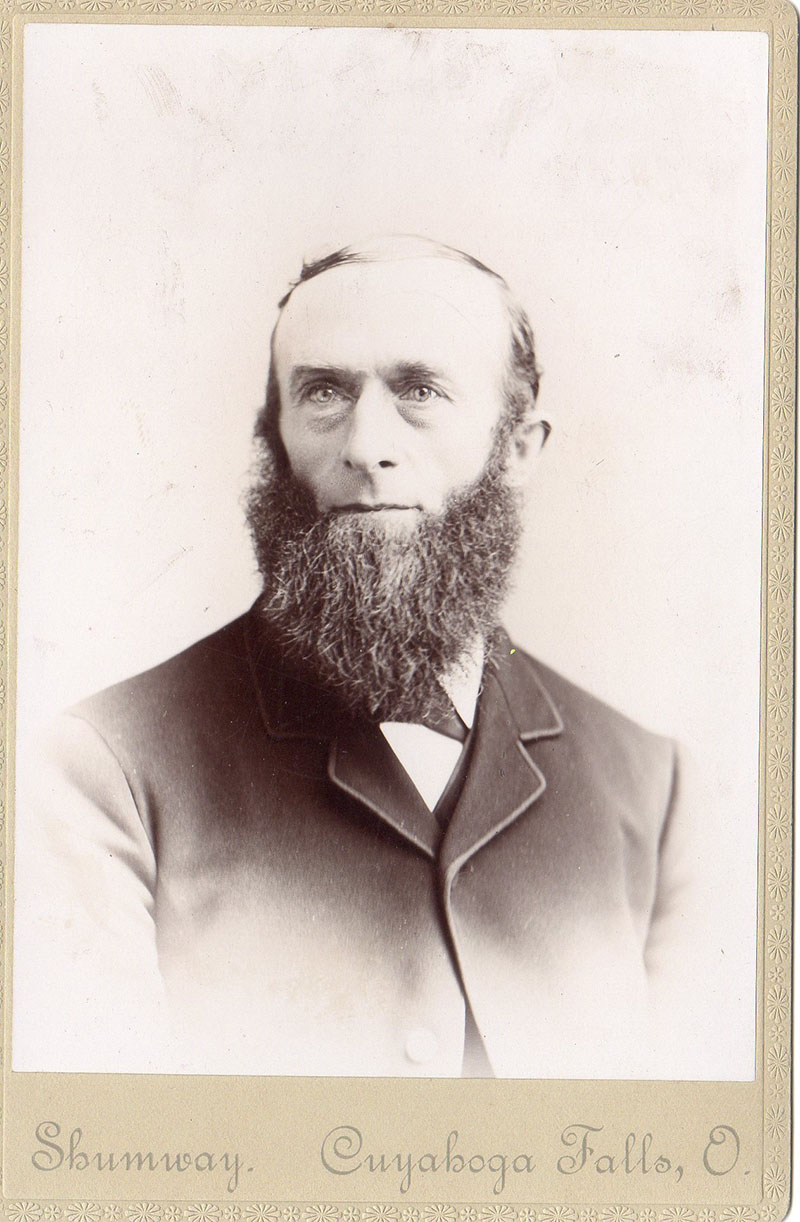
Matthew Crawford was known nationally for his horticultural skills.
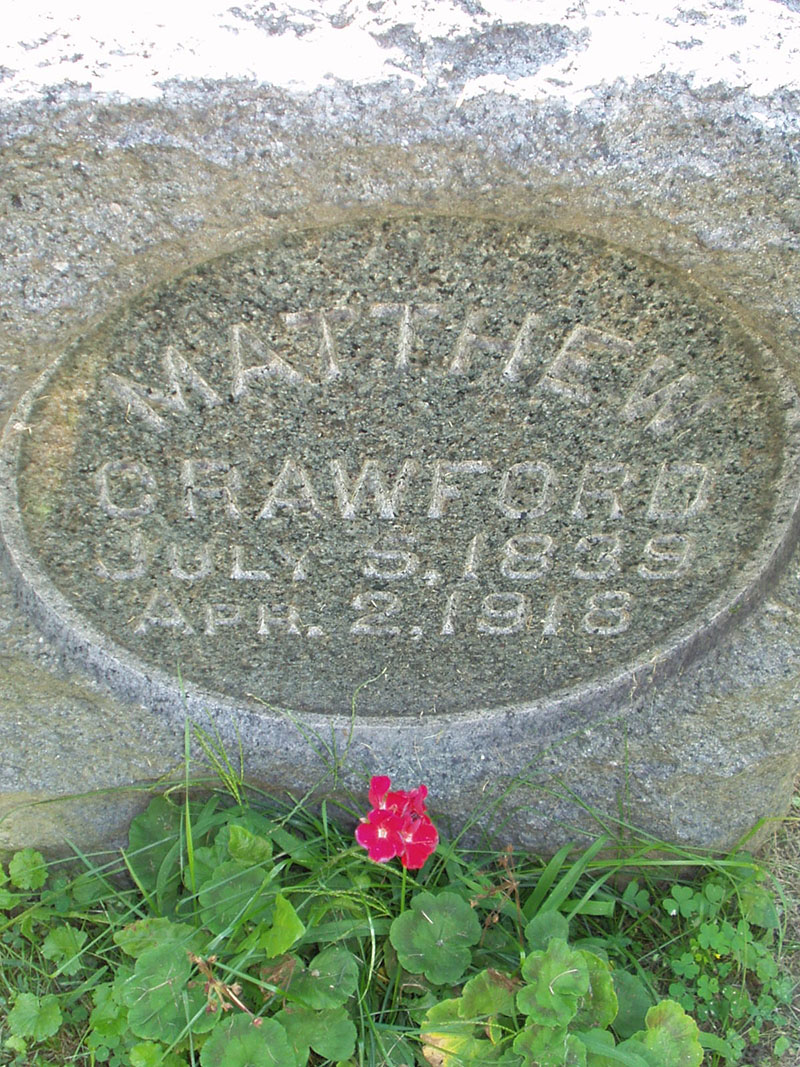
Oakwood Cemetery marks Crawford’s final resting place
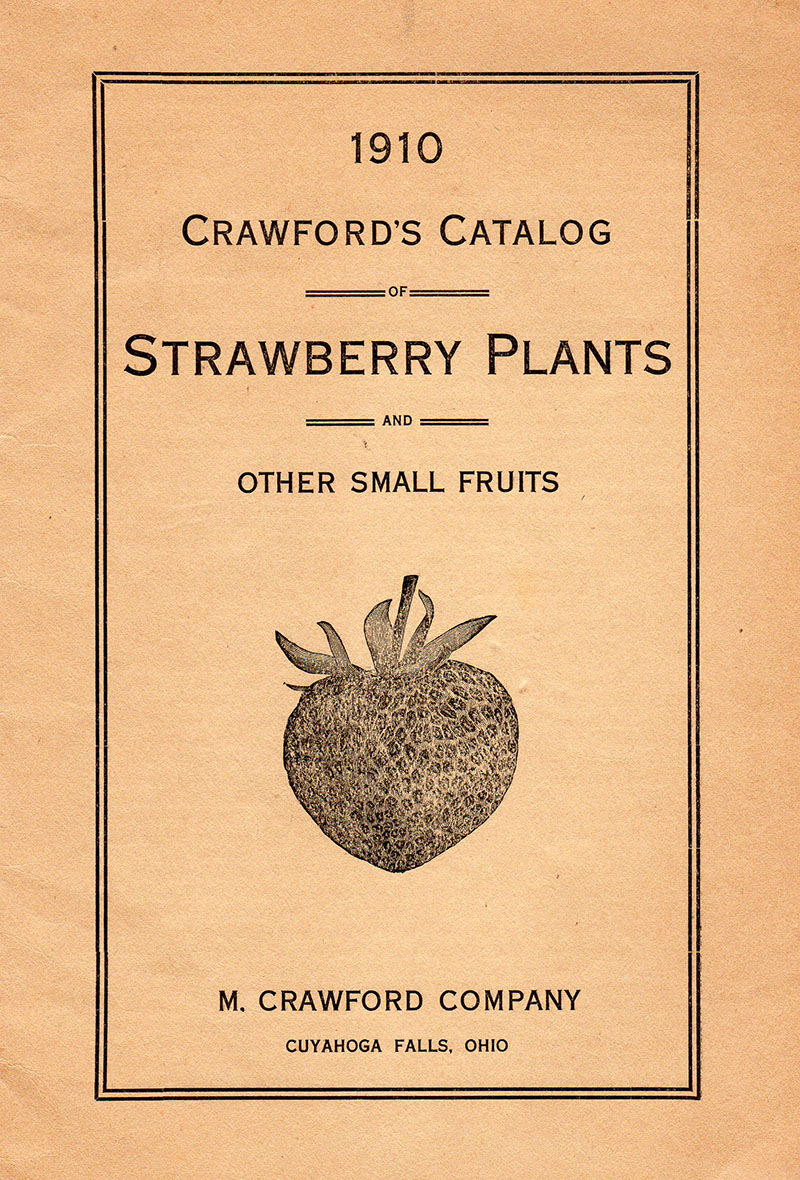
Customers across the U.S. could order specially-cultivated strawberry plants from Crawford through catalogs such as this one.
Frequently Asked Questions
Who was Matthew Crawford of Cuyahoga Falls?
Matthew Crawford (1839–1918) was an Irish-born horticulturist who lived in Cuyahoga Falls, Ohio, from the 1860s until his death. He became nationally known for breeding strawberries and gladioli and for his guide Strawberry Culture.
Why was Matthew Crawford called the “Dean of Gladiolus Culture”?
Crawford is credited as the first American to plant gladiolus seed in large quantities. He developed more seedling gladioli than anyone of his time and was among the first major suppliers of gladiolus bulbs to seed houses.
Where is Matthew Crawford buried?
Matthew Crawford and his wife, Ellen Knight Crawford, are buried at Oakwood Cemetery, 2420 Oakwood Drive, Cuyahoga Falls, Ohio.
Was Crawford School in Cuyahoga Falls named after Matthew Crawford?
No. The former Crawford School at Third Street and Tifft Avenue was named for his wife, Ellen Knight Crawford, a respected local teacher and education advocate.
— Mary L. McClure, Cuyahoga Falls Historical Society
The Latest…
September’s CFHS Meeting Explored Victorian Era Medicine of the 1860s
Quick answer: On September 8, 2026, the Cuyahoga Falls Historical Society opened its fall program season with a talk on Victorian era medicine by historical presenter Richard Best. Best showed 1860s surgical instruments, splints and medicines, demonstrated how pills...
Relive Your Cuyahoga Falls School Days at Our Front Street Window Display
Quick answer: The Cuyahoga Falls Historical Society has opened a free storefront window display of vintage Cuyahoga Falls school memorabilia at 2114 Front Street, in the front window of Circle Prime Manufacturing—the building many longtime Fallsites remember as...

A New Chapter for Our History: Celebrating Our Legacy and Our New Online Home
For over four decades, the Cuyahoga Falls Historical Society has served as the memory of our community. Since our founding in 1980, we’ve been the stewards of the stories, artifacts, and milestones that have shaped Cuyahoga Falls from its settlement in 1812 to the...